

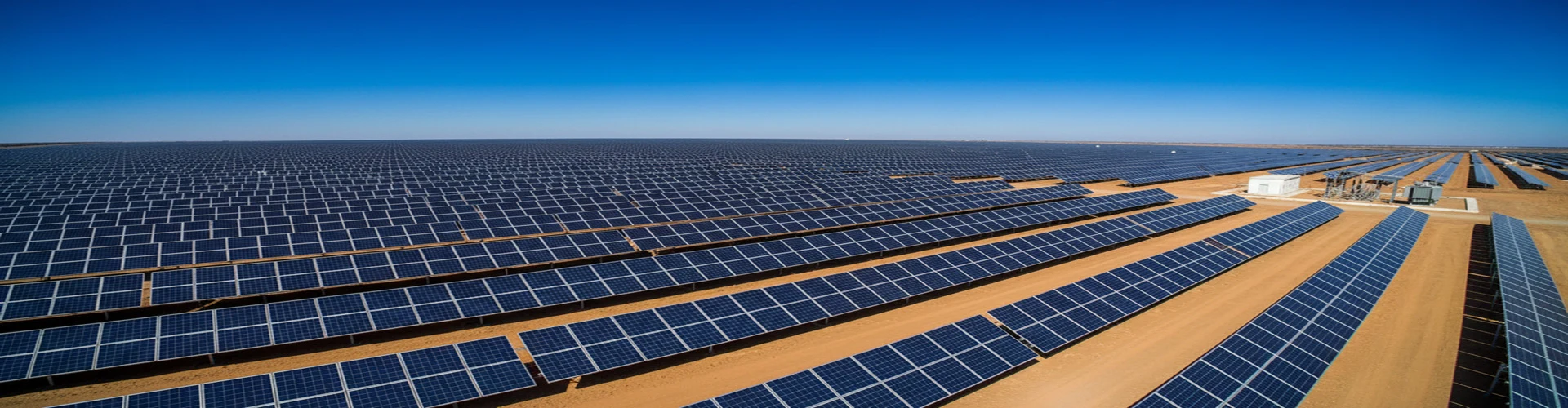
L'agrivoltaïque — cultiver des cultures ou élever du bétail sous ou autour de panneaux photovoltaïques — est passée du papier de recherche à la réalité commerciale. In Morocco, where agriculture consumes roughly 85% of freshwater and electricity for pumping is a major farm expense, the arithmetic is compelling. But not every site is a good candidate. Three archetypes work consistently.
1. Pompage solaire + stockage, plein champ
Le cas le plus simple. Un champ PV autonome alimente directement une pompe d'irrigation, souvent avec une petite batterie ou un réservoir de stockage. Les panneaux sont dimensionnés sur le profil hydraulique, pas la charge électrique. Idéal pour les cultures économes en eau, le goutte-à-goutte, les champs isolés hors réseau. Retour sur investissement typique : 3–5 ans face au pompage diesel.
2. PV sur Serre
Modules semi-transparents ou modules opaques à motif sur le toit de la serre. The trick is matching the light transmission the crop actually needs. Tomatoes and strawberries tolerate 30–40% shading; leafy greens handle more. Best for protected cultivation operations already investing in new greenhouses. The PV is designed into the structure, not retrofitted.
3. Canopée agrivoltaïque surélevée, cultures arborées
Panneaux montés sur structures hautes (3–5 m) au-dessus d'oliviers, d'agrumes ou d'arganiers. The shading reduces evapotranspiration and heat stress in summer; the electricity offsets pumping and cold-storage costs. Capex is significantly higher than ground-mount utility PV, so this archetype needs either a strong self-consumption case or an agricultural co-benefit that monetises. Best for high-value perennial crops in the hottest zones, where summer heat is already yield-limiting.
Ce qui ne fonctionne pas (encore)
Les canopées à mi-hauteur au-dessus des céréales à l'échelle commerciale restent marginales in Morocco — the yield uplift rarely offsets the structural cost. Livestock agrivoltaics is a good dual-use story, but it is a grazing arrangement, not really agrivoltaics.
La seule question à trancher d'abord
Ce projet est-il d'abord une affaire de culture ou d'électricité ? Agrivoltaics only pencils when both sides of the equation are designed together. Bolting panels onto a farm that doesn't need them, or farming under panels just to qualify for a subsidy, produces bad crops and bad electricity.