

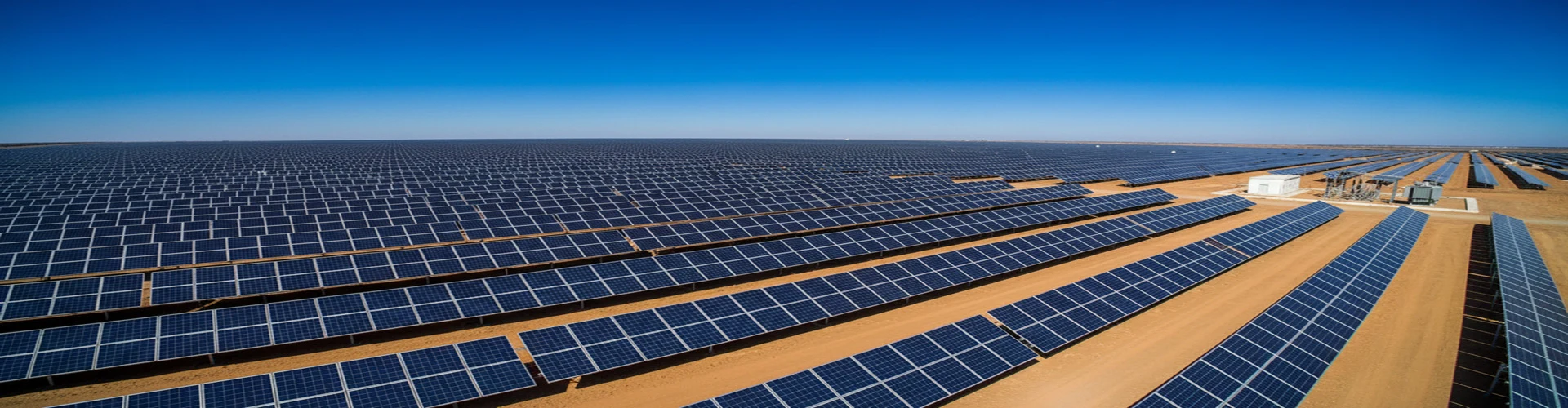
Agrivoltaics — growing crops or raising livestock under or around photovoltaic panels — has moved from research paper to commercial reality. In Morocco, where agriculture consumes roughly 85% of freshwater and electricity for pumping is a major farm expense, the arithmetic is compelling. But not every site is a good candidate. Three archetypes work consistently.
1. Solar Pumping + Storage, Open Field
The simplest case. A standalone PV array drives an irrigation pump directly, often with a small battery or a pumped storage reservoir. The panels are sized to the hydraulic profile, not the electrical load. Best for low-water crops, drip irrigation, remote fields off the grid. Payback is typically 3–5 years against diesel pumping.
2. Greenhouse PV
Semi-transparent modules or patterned opaque modules on the greenhouse roof. The trick is matching the light transmission the crop actually needs. Tomatoes and strawberries tolerate 30–40% shading; leafy greens handle more. Best for protected cultivation operations already investing in new greenhouses. The PV is designed into the structure, not retrofitted.
3. Elevated Agrivoltaic Canopy, Tree Crops
Panels mounted on high structures (3–5 m) above olive, citrus or argan trees. The shading reduces evapotranspiration and heat stress in summer; the electricity offsets pumping and cold-storage costs. Capex is significantly higher than ground-mount utility PV, so this archetype needs either a strong self-consumption case or an agricultural co-benefit that monetises. Best for high-value perennial crops in the hottest zones, where summer heat is already yield-limiting.
What Doesn't Work (Yet)
Mid-height canopies over cereals at commercial scale are still marginal in Morocco — the yield uplift rarely offsets the structural cost. Livestock agrivoltaics is a good dual-use story, but it is a grazing arrangement, not really agrivoltaics.
The One Question to Answer First
Is this project primarily about the crop or primarily about the electricity? Agrivoltaics only pencils when both sides of the equation are designed together. Bolting panels onto a farm that doesn't need them, or farming under panels just to qualify for a subsidy, produces bad crops and bad electricity.